The Role of Innovation in the Startup Ecosystem
13 September 2026
Innovation is the most misunderstood word in business. Founders slap it on pitch decks like a coat of paint. Investors use it to justify valuations that defy arithmetic. Accelerators print it on banners. And yet, when you strip away the noise, innovation is not a slogan. It is a mechanism. It is the process by which a small team with limited resources creates something that larger, better-funded competitors cannot easily copy or kill.
That distinction matters more than most people realize. If your innovation can be replicated by a competitor with a bigger budget and a larger sales force, you do not have an innovation. You have a feature. Features get absorbed. Innovations reshape markets.
This article is about how innovation actually functions inside a startup ecosystem. Not the romantic version. The operational version. The version that determines whether you build something durable or become a footnote in someone else's acquisition strategy.

What Innovation Actually Means in a Startup Context
Corporate innovation and startup innovation are not the same animal. A large company can afford to run dozens of experiments, kill most of them, and still report stable earnings. A startup does not have that luxury. Every experiment burns runway. Every failed pivot costs credibility with investors and morale with the team.So what is innovation for a startup? It is the deliberate application of scarce resources to solve a problem in a way that produces disproportionate returns. The keyword is disproportionate. Incremental improvement is not innovation in this context. It is maintenance. If your product is 10 percent better than the incumbent, you will likely lose, because incumbents have distribution, brand trust, and existing customer relationships that outweigh a marginal quality gap.
Startup innovation needs to be 10x better on at least one dimension that customers genuinely care about. Not 10x cheaper across the board, not 10x more features, but 10x on a single axis that matters. Stripe made it 10x easier for developers to accept payments. Notion made it 10x more flexible for teams to organize knowledge. These were not marginal gains. They were category shifts.
The second defining trait is defensibility. Innovation without a moat is charity. If you solve a problem brilliantly and anyone can copy you within six months, you have done the market a favor and yourself a disservice. Defensibility can come from network effects, proprietary data, switching costs, regulatory barriers, or sheer execution speed. But it has to come from somewhere.

Why the Ecosystem Matters More Than the Idea
A common misconception among first-time founders is that the idea is the hard part. It is not. Ideas are abundant and cheap. What is scarce is the environment that allows an idea to become a company.The startup ecosystem is not a single thing. It is a collection of interlocking components: talent, capital, mentorship, customers, universities, regulation, and culture. When these components work together, innovation accelerates. When they do not, innovation stalls regardless of how brilliant the founding team is.
Consider the difference between two founders with identical ideas. One is in a city with active angel investors, experienced operators willing to advise, a steady flow of engineering talent, and customers open to trying new products. The other is in a region with none of these. The first founder has a fighting chance. The second has a hobby.
This is why innovation policy and ecosystem development are not abstract concerns. They directly determine which ideas get tested and which die on whiteboards. Silicon Valley did not become dominant because people there are smarter. It became dominant because the ecosystem reduced the cost of experimentation and increased the speed of feedback.
The Feedback Loop That Drives Iteration
Innovation in startups is iterative by nature. You ship something rough, you watch how people use it, you adjust, you ship again. The faster this loop runs, the faster you learn. The faster you learn, the more likely you are to find product-market fit before your money runs out.This is why ecosystems with dense concentrations of early adopters are so valuable. Early adopters do not just buy your product. They tolerate its flaws, give you detailed feedback, and often become your most vocal advocates. Without them, you are guessing. With them, you are iterating.
The practical implication is simple. If you are building something new, go where the early adopters are. Not where the investors are. Not where the cheapest office space is. Where the people who desperately need your solution already gather.
Types of Innovation and When Each One Works
Not all innovation looks the same. Confusing the types leads to bad strategic decisions. Here is a breakdown that actually helps you think clearly.Disruptive Innovation
Disruptive innovation typically starts at the low end of a market or in a segment that incumbents ignore because it is not profitable enough. The product is often worse by traditional metrics but better on dimensions that a specific group of customers values, like price, simplicity, or accessibility.This approach works when incumbents are structurally unable or unwilling to respond. It fails when incumbents can simply copy you and use their distribution to crush you. Before committing to a disruptive strategy, ask yourself whether the incumbent's business model prevents them from following you down-market. If the answer is no, you are in trouble.
Sustaining Innovation
Sustaining innovation improves an existing product for existing customers. It is what most established companies do well. For startups, sustaining innovation is a trap unless you have a genuine technical advantage that incumbents cannot replicate.The reason is simple. Incumbents have more resources, more customer data, and more distribution. If you are competing on the same axis, you will lose. The only exception is when you have a proprietary technology or a team with expertise that cannot be hired away easily.
Business Model Innovation
Sometimes the technology is not new. The way you deliver it is. Business model innovation changes how value is created, delivered, or captured. Subscription pricing replacing one-time purchases. Freemium replacing paid trials. Marketplaces replacing linear supply chains.This type of innovation is powerful because it is hard to copy without cannibalizing existing revenue. A company that sells software licenses cannot easily switch to subscriptions without upsetting its sales force and its financial reporting. That gives you room to move.
Architectural Innovation
Architectural innovation reconfigures existing components into a new system. You are not inventing new technology. You are combining proven pieces in a way that creates new value. This is often the most accessible form of innovation for startups because it does not require breakthrough research.The risk is that architectural innovations are easier to copy once the concept is proven. Your advantage comes from being first and executing faster than anyone else.

The Role of Capital in Shaping Innovation
Money does not create innovation. But the absence of money kills it. The structure of capital in an ecosystem determines what kinds of innovation get pursued.Venture capital, for example, is designed for high-risk, high-return bets. It funds companies that can plausibly return 10x or more. This means VC-backed innovation tends to cluster around large markets with winner-take-most dynamics. If your idea is a solid business that could generate a few million dollars in profit annually, venture capital is the wrong funding source. You will be pushed to grow faster than the business can support, and you will likely fail.
Angel investors and revenue-based financing serve different purposes. Angels often invest based on personal conviction and sector expertise. They can be more patient. Revenue-based financing works for businesses with predictable cash flows but limited exit potential.
The mistake founders make is taking the wrong kind of money. If you take venture capital for a business that should be bootstrapped, you will be forced into decisions that destroy value. If you bootstrap a business that needs capital to capture a winner-take-most market, you will lose to a competitor who raised.
Before you raise money, ask what kind of innovation you are pursuing. Incremental, cash-flow-positive businesses should avoid dilution. Category-defining, land-grab businesses usually cannot.
Common Mistakes That Kill Innovation in Startups
Most startups do not fail because of bad ideas. They fail because of execution errors that could have been avoided. Here are the ones that show up again and again.Confusing Innovation With Novelty
Novelty is doing something different for the sake of being different. Innovation is doing something different because it solves a real problem better than the status quo. Founders who chase novelty build products that impress other founders but confuse customers. If your target user does not immediately understand why your product exists, you have a problem.Ignoring Distribution
A brilliant product with no distribution strategy is a science project. Innovation has to reach people. This means thinking about channels, partnerships, pricing, and sales from day one. Many technical founders treat distribution as an afterthought. It is not. It is half the battle.Scaling Too Early
Premature scaling is the most common way startups die. You get excited about early traction, hire aggressively, spend on marketing, and then discover that your unit economics do not work. Innovation requires patience. You need to prove that the model works before you pour fuel on it.Listening to the Wrong Customers
Customer feedback is essential, but not all feedback is equal. Existing customers will often ask for incremental improvements. Prospects who rejected you will tell you why. People who have never heard of you will reveal whether your value proposition is clear.The trap is building exclusively for your loudest users. They are not representative. They are just the ones who talk the most.
Protecting the Idea Instead of Testing It
Stealth mode feels safe. It is not. It delays feedback, which is the most valuable resource you have. Unless you are working on something that can be trivially copied by a well-resourced competitor, share your idea. Talk to potential customers. Talk to investors. Talk to people who will tell you the truth. The risk of someone stealing your idea is far lower than the risk of building something nobody wants.
How to Build an Innovation Culture That Actually Works
Culture is not perks and slogans. It is the set of behaviors that get rewarded and punished. If you want innovation, you have to build a system that produces it consistently.Reward Learning, Not Just Success
If your team fears failure, they will avoid risk. If they avoid risk, they will not innovate. The solution is not to celebrate failure blindly. It is to celebrate learning. A failed experiment that produces a clear insight is more valuable than a successful experiment that teaches nothing.Give People Ownership
Innovation rarely comes from people who are told exactly what to do. It comes from people who have autonomy, context, and accountability. Give your team problems to solve, not tasks to complete. Let them figure out the how.Create Space for Deep Work
Constant meetings and Slack notifications destroy the cognitive space required for creative problem solving. Protect blocks of uninterrupted time. Some of your best ideas will come from people who have the mental bandwidth to think.Diversify Your Team
Homogeneous teams produce homogeneous ideas. If everyone has the same background, education, and worldview, you will miss obvious opportunities and blind spots. Diversity is not a checkbox. It is a competitive advantage when it comes to innovation.Measuring Innovation Without Killing It
Metrics can be useful or destructive depending on how they are used. If you measure innovation by the number of ideas generated, you will get a lot of bad ideas. If you measure it by revenue from new products, you will discourage early-stage experimentation.A better approach is to track leading indicators. How many customer problems have you validated this quarter? How many experiments have you run? How quickly are you learning? These are not perfect metrics, but they point in the right direction.
The key is to separate exploration from execution. Exploration needs different metrics, different timelines, and different tolerances for failure. Execution needs discipline and accountability. Mixing the two creates confusion and resentment.
The Future of Innovation in Startups
The startup ecosystem is always evolving. What worked a decade ago does not necessarily work today. Capital is more abundant in some sectors and tighter in others. Talent is more mobile. Customers are more demanding. Regulation is more complex.What remains constant is the fundamental dynamic. Small teams that solve real problems in defensible ways will always have a place. The specific technologies and markets will change. The principles will not.
Founders who understand this will build better companies. They will not chase trends. They will not confuse novelty with value. They will focus on the hard, unglamorous work of understanding customers, building products that work, and creating moats that protect what they have built.
That is what innovation actually looks like in practice. Not a buzzword. Not a pitch deck slide. A disciplined process of creating value that others cannot easily replicate.
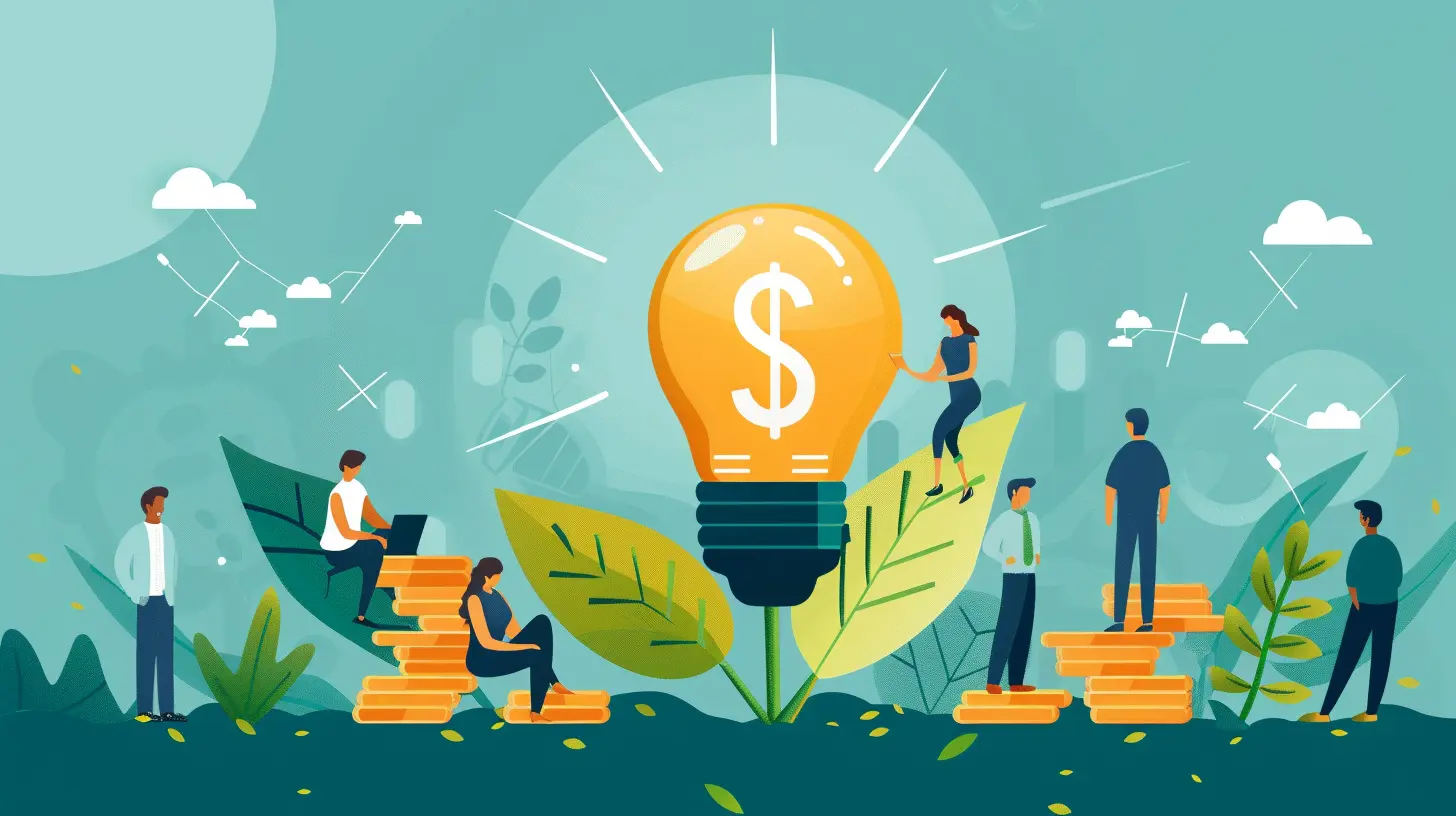
all images in this post were generated using AI tools
Category:
StartupsAuthor:

Lily Pacheco
Discussion
rate this article
2 comments
Kendall Ford
Innovation drives growth and success in the startup landscape.
October 9, 2026 at 3:45 AM
Yvonne Sheppard
Innovation in the startup world is like a cat in a room full of rocking chairs-if you're not careful, you might get knocked over. But hey, when it works, it's a glorious leap! Just remember, even cats trip over their own paws sometimes.
September 19, 2026 at 11:20 AM
Lily Pacheco
That's a great analogy! Innovation can be risky, but those leaps can lead to amazing breakthroughs. Embracing the bumps along the way is part of the journey.